Constitutionally Enshrined Checks and Balances Part 1

As I had mentioned in an earlier installment of this series on “Checks and Balances,” the empirical literature has shown that Parliamentary systems appear to have an advantage over their presidential counterparts. Among the works cited were McManus and Ozkan (2017). The duo’s work reconfirmed the Parliamentary system’s superior performance on key economic indicators such as inflation, growth, and (reducing) inequality.

But McManus and Ozkan are not alone. Mainwaring and Shugart (1997)—while acknowledging the ostensibly inherent advantages of Parliamentary systems— underscored the roles played by institutional factors to mitigate the harmful tendencies of presidential systems. They wrote:

“Presidential systems can be designed to function more effectively than they usually have. We have argued that providing the president with limited legislative power, encouraging the formation of parties that are reasonably disciplined in the legislature, and preventing extreme fragmentation of the party system enhance the viability of presidentialism. [The literature] clearly recognizes that not any kind of parliamentarism will do. We make the same point about Presidentialism.”

Continue reading

Despite sharp drop in tourism, FOREX remain stable: CBB data shows

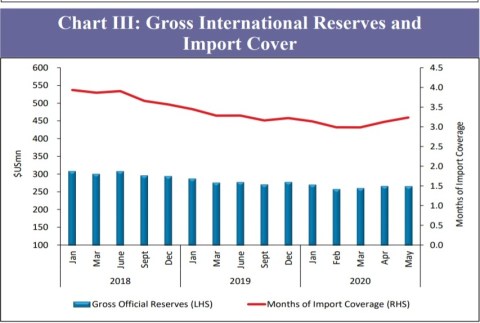
Recently published data by the Central Bank of Belize (CBB) shows that despite the precipitous drop in the Tourism sector’s foreign exchange (FOREX) inflows, overall balances remain relatively stable.

According to the CBB’s “Weekly Monetary Aggregates” for July 31st 2020, the (overall) Net Foreign Assets of the Banking System amounts to approximately BZD $886.5 million (or USD 443.25 million). This figure, when compared to the overall figure for the same period last year (BZD $877.4), is up by just about one percent. A similar increase is observed even when viewed as year to date (YTD).

Signs of this slight increase were visible from May, when the CBB, in its Monthly Economic Highlight for that month, wrote: “The net foreign assets of the banking system rose by $6.6mn (0.8%) over the year to date after declining by $21.9mn in May.” The regulator added, “During the month, domestic banks’ foreign asset position weakened by $19.5mn with the collapse in tourism revenue because of the adverse impact of the Coronavirus disease 2019 (COVID 19) pandemic. Concurrently, Central Bank’s holdings dipped by $2.4mn mainly as a result of facilitating Central Government’s debt service payments.” Continue reading

Facts versus Opinions

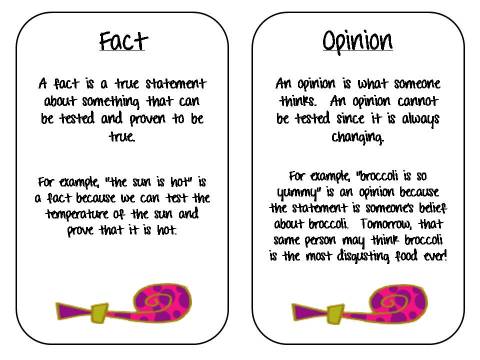
I’ve been trying figure out what is it exactly about this whole ICJ debate that bothers me so much. Is it that I simply disagree with certain positions? Nah, that’s not it; people are entitled to their positions, and we wouldn’t have a healthy democracy otherwise. Is it that my I.S.T.J. mind just cannot tolerate how emotional some arguments have become? Nope. That can’t be it, because I’d be concerned if patriotic Belizeans weren’t moved to their core on this matter. So, then what is it?

And then it hit me. It’s the fact that I miss the days when an argument clearly separated between facts and opinions. In this post-truth or post-fact era, there’s an interesting phenomenon where opinions are no longer necessarily based on facts; but on other opinions disguised as opinions. The mechanics of how this works seem to exist within #ECHOchambers, which are dangerous in and of themselves. Continue reading

CARICOM to U.S. Courts: You’re putting the C.C.J’s legitimacy at risk!

  • Decisions that snub CCJ opinions undermine its legitimacy and impede aspirations for independence and regional cohesion.
  • Allowing CCJ opinions to be circumvented has the deleterious effect of weakening the value of the CCJ as an institution.
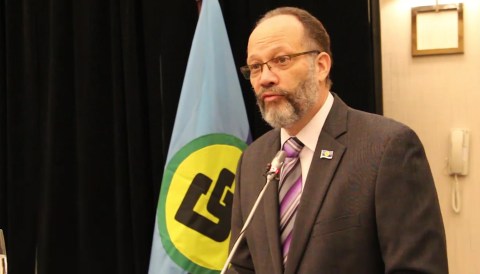
  • “Further efforts to utilise the CCJ in strengthening the governance of its Member States and to expand the CCJ’s final appellate jurisdiction will be hindered if import decisions by the CCJ that go directly to the rule of law and support essential tenets of democracy are summarily disregarded by courts of other jurisdictions in the international community.”—CARICOM Secretary General Irwin LaRoque.

Should the United States’ Courts be able to override decisions made by the highest appellate Court in the Caribbean region, The Caribbean Court of Justice (CCJ)? That’s the question that has been brought, once again, to the fore, of late, in large part due to the latest developments in the Belize government’s case against entities such as BCB Holdings Limited, Belize Social Development Limited, and NEWCO. Continue reading

The economic outlook and pay raise?

Avoiding any of the politics and emotive elements of this particular issue, in many ways I have to endorse what the Public Service Union and the Association of Public Service Senior Managers (APSSM) have decided to do: that is, defer their pay raise/adjustment given the distressed state of the Belizean economy.
 
Currently, the entire global outlook is less than optimal. One could pick from any reputable source for macroeconomic forecast and the story remains the same: the outlook for Caribbean economies “remains fragile”.
 
For example, the International Monetary Fund (IMF) 2016 Regional Economic Outlook (Western Hemisphere) put it this way: “With the global economy still struggling, many countries in Latin America and the Caribbean are facing a harsher world than they did just a few years ago.” (See IMF report here)
 

Continue reading

Keeping Hope Alive: Can Belize’s Q3, Q4 growth figures pull us up?

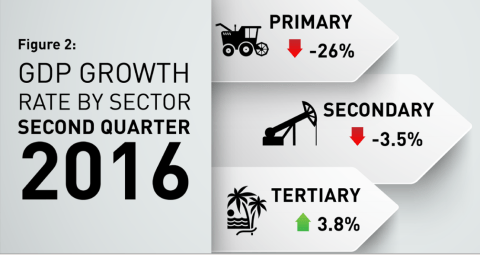
Okay, so there is certainly a lot going on in the Belizean political scene of late. Everything from the Audit Report to the Section 53 ruling to the Mason saga have been dominating the news cycle and public discourse for the last few weeks. However, one line of conversation has quietly slipped into the background: the Belizean economy.

Earlier this year the International Monetary Fund (IMF) had indicated that 2016 would have seen subdued GDP (Gross Domestic Product) growth at about 0.5%; however, it’s likely that even their estimate could prove to be a bit more on the optimistic side of things.  Continue reading

Legality versus Morality: what’s ‘Christianity’s’ role in modern-day democracies?

“But let none of you suffer as a murderer, or as a thief, or as an evildoer, or as a busybody in other men’s matters.”–1 Peter 4:15

“Christians, from mistaken zeal, under the plea of faithfulness, might readily step out of their own calling and make themselves judges of the acts of unbelievers. Literally, ‘a bishop in what is (not his own, but) another’s’ province; an allusion to the existing bishops or overseers of the Church; a self-constituted bishop in others’ concerns”. (See Jamieson-Fausset-Brown Bible Commentary)

 In the wake of the recent Section 53 ruling, many Belizeans who are either devout members of a particular christian denomination or simply disgusted by the homosexual lifestyle have come out swinging at the Chief Justice and  the members of the gay community. Fundamentally, I understand what has some members of the church community so up in arms. They’ve been consistently fed a doctrine that one of their principal missions in life is to speak out against sin, and there’s been some who have been fed from a school of thought that suggests that God is prone to send calamity upon a nation where such sin exists. The latter, of course, stems from Old Testament teachings, with examples such as the destruction of Sodom and Gomorrah reigning as one of the most prominent cases.

Continue reading

Technocrats as Ministers vs. Politicians as Ministers

Since 2014, I had purposed to myself to no longer spend time discussing themes such as “corruption” and “transparency” in government. Fundamentally, I find it to be a virtually pointless exercise. The conversation usually revolves around politicians in office; however, I have long since adopted the views expressed in Hulse, Gordon and Herrera’s “Fixing the System” booklet.

In said publication, written roughly a decade ago and which presents ideas that are by no means “brand new” to the discourse on the need for structural reforms, the authors suggested, among other things, that the members of Cabinet be made up mostly of non-elected officials. Why was such an idea deemed necessary? The fact of the matter is this: while many Belizeans spend much time blaming politicians for the existence of corruption in public affairs, the reality of the matter is that there is a large portion of the electorate who put demands on said politicians to share the “spoils” of their “political victory”.

I will spare you the long drawn out discussion on clientelism and its ills, but shall limit this post to simply say that it is the relationship between the “client” and the “patron” (the voter and political actors) that is the true source of corruption.

Moreover, it would appear that all stakeholders, including the media, have accepted as normal the distribution of ministerial portfolios to area representatives as a type of reward for bringing in the votes. When one looks at the recent conversation regarding former Deputy Prime Minister Gaspar Vega’s removal from the Ministry of Natural Resources, it becomes clear that these portfolios are viewed in this manner. Is that the most efficient approach? The answer, I believe, is self evident.

Therefore, temporarily breaking my two-year moratorium on this topic, it would appear that Prime Minister Barrow does rightly demonstrate more confidence in NON-elected officials’ ability to straighten up ministries, as we all should. His recent Cabinet reshuffle yet again displays this apparent truth, as non-elected Senator Godwin Hulse, one of the authors of the “Fixing the System” publication I alluded to earlier, now becomes the Minister of Police, in the midst of this ongoing “Danny Mason” scandal. Simultaneously, another non-elected figure, Attorney General Vanessa Retreage takes over the Natural Resources portfolio. But, in order for her to take on this post, she must first be sworn in as a senator, thereby, replacing one of the current senators.

The Constitution

Undoubtedly conspicuous is the fact that non-elected officials are not motivated by the same things as their elected counterparts are; moreover, a party leader would be able to fire such non-elected offcials without fearing a weakened position in the Legislature. Therefore, it’s logical to expect “better” performance. However, our constitution [Specifically Section 40(2)] limits any Prime Minister from appointing a minister who is NOT a member of the House of Representatives or the Senate. Therein lies the rub.

The Constitution states: “Appointments to the office of Minister shall be made by the Governor-General, acting in accordance with the advice of the Prime Minister, from among members of the House of Representatives and of the Senate”

It is for this reason that I’ve deemed the current nature of the “corruption” conversation to be relatively futile, because we continue to discuss “personalities” and “individuals” as opposed to the requisite systems overhaul.

Consequently, instead of chasing behind politicians from one corruption scandal after the other, in my view, the conversation in the public sphere may get more long-lasting results by looking at possible amendments to Section 40(2) of the Constitution. However, not too long ago, in the heights of the Penner scandal, it was Senator Hulse who commented to the effect that if the media had given the “Fixing the System” call for reform the same degree of attention they gave “Pennergate”, the issue itself may have never emerged. But reform talk isn’t as entertaining.

But is the media at fault? The media falls victim to the same market forces of any business: they have to “sell” what there’s a demand for. Therein lies another rub and the epitomic definition of a “Catch 22” scenario. I think of Al Jazeera America’s demise here too.

In my view, it’s preferable to have a system in which ALL ministers be technocrats as opposed to politicians, but how do you get the majority of the constituents and the electorate to first become aware, then interested, then to desire, and lastly demand such change. As things currently stand, if the media were to put such things as headline news everyday, it’s likely they’d lose viewers/readers’ interest, which would likely translate into revenue loses for said media houses. Although, some would say it’s just a matter of packaging. I won’t deny that there’s truth to that point, except to say that such “packaging” comes with higher operational costs, at least in the earlier phases.

The Long-term Solution

In the end, to achieve mass “buy in” for such reform, there is need for medium- to long-term social marketing efforts that educate the masses of the superior benefits of having such a change. This is where civil society, for example, can come in. Of course, the media could also help with specific shows, columns, editorials or programs that slowly but surely promulgate these views.

It, however, cannot be overnight. The ugly truth is this: some politicians may actually be voted out of power under a system in which they have no ministerial “power” over the country’s resources. Therefore, Prime Minister Barrow and any other party leader will be careful how they approach any such change. Think about it: what would many voters do if they can’t get that scholarship or that “piece of land” from their area representative who no longer sits in Cabinet?

People must first be made to see the benefits of a “cleaner” system in which the executive branch is made up of trained professionals, while politicians stay where they belong: in the legislature. Just thinking out loud.

The ‘independent status’ of Belize’s borders with Guatemala

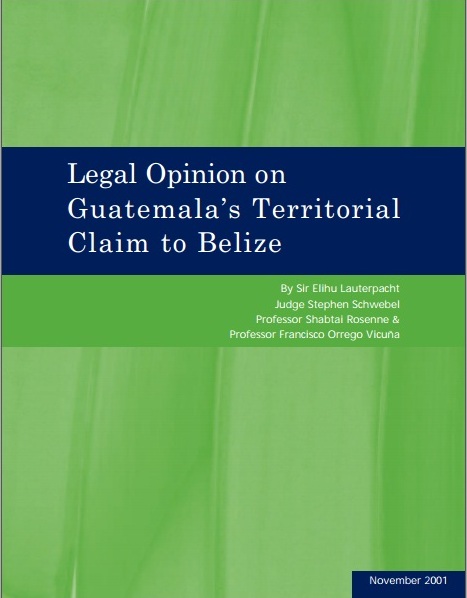
Given that one of the most important public affair for Belize continues to be the ongoing territorial dispute and whether or not to submit the matter to the International Court of Justice (ICJ), I decided to let my first post on ResPublica360 be that of an old article that I had written in 2013. The following is the content of an article that I had written in The Reporter newspaper:  Continue reading