
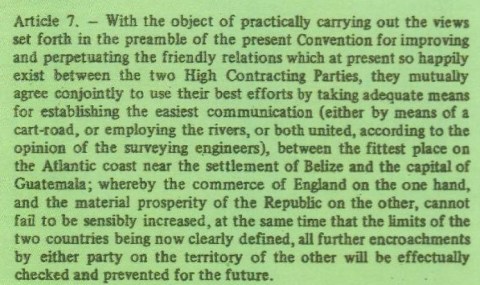
In the last installment of the Road to Referendum (RtR) column, we had commenced a discussion on the International Court of Justice (ICJ)’s bias as it pertains to preserving boundary treaties. As was pointed out in that last RtR piece, Alberto Alvarez-Jimenez—in his article “Boundary Agreements in the International Court of Justice’s Case Law, 2000-2010”, which was published in The European Journal of International Law— stated:
“The Court’s case law of the first decade of the 21st century shows that the Court has been somewhat flexible in endorsing the validity of boundary agreements once it has declared them. States that have subsequently invoked the nullity of boundary treaties or settlements have not found a receptive Court to uphold such claims. … While room for declarations of nullity certainly exists, it can be regarded as narrow, absent very compelling reasons. The threshold is high, and states are well advised when raising such a claim to expect success only exceptionally in boundary disputes” (Alvarez-Jimenez, 2012, p. 20). Continue reading
 Res Publica360