
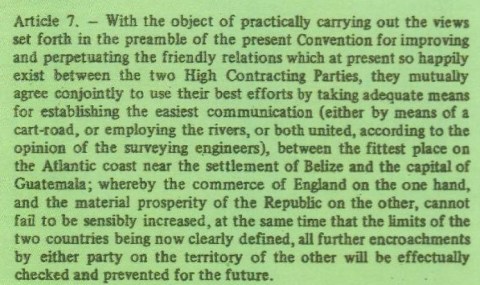
The notorious Article 7 and what was actually agreed

In the last installment of the Road to Referendum (RtR) column, we had commenced a discussion on the International Court of Justice (ICJ)’s bias as it pertains to preserving boundary treaties. As was pointed out in that last RtR piece, Alberto Alvarez-Jimenez—in his article “Boundary Agreements in the International Court of Justice’s Case Law, 2000-2010”, which was published in The European Journal of International Law— stated:

“The Court’s case law of the first decade of the 21st century shows that the Court has been somewhat flexible in endorsing the validity of boundary agreements once it has declared them. States that have subsequently invoked the nullity of boundary treaties or settlements have not found a receptive Court to uphold such claims. … While room for declarations of nullity certainly exists, it can be regarded as narrow, absent very compelling reasons. The threshold is high, and states are well advised when raising such a claim to expect success only exceptionally in boundary disputes” (Alvarez-Jimenez, 2012, p. 20). Continue reading
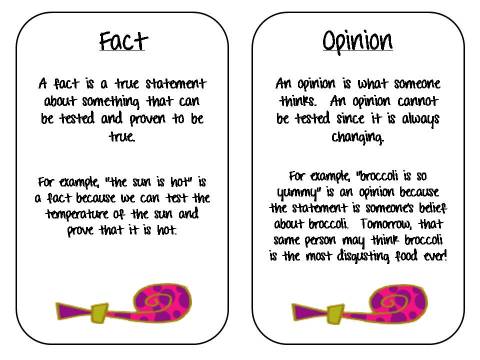
The ICJ is biased!!!

In the run up to the April 10th 2019 referendum regarding the Belize-Guatemala Territorial Dispute, it has become evident that the discussion needs to start to separate between facts and opinions. To that end, this article marks the first installment of a fact-check series for Res Publica 360.

Among the many things discussed about the International Court of Justice (ICJ) is the question as to whether or not the Court has a tendency to make biased rulings. And, as the title of this article indicates, the answer to that question is “yes”. However, one has to ask what is that bias?  Continue reading

Facts versus Opinions

I’ve been trying figure out what is it exactly about this whole ICJ debate that bothers me so much. Is it that I simply disagree with certain positions? Nah, that’s not it; people are entitled to their positions, and we wouldn’t have a healthy democracy otherwise. Is it that my I.S.T.J. mind just cannot tolerate how emotional some arguments have become? Nope. That can’t be it, because I’d be concerned if patriotic Belizeans weren’t moved to their core on this matter. So, then what is it?

And then it hit me. It’s the fact that I miss the days when an argument clearly separated between facts and opinions. In this post-truth or post-fact era, there’s an interesting phenomenon where opinions are no longer necessarily based on facts; but on other opinions disguised as opinions. The mechanics of how this works seem to exist within #ECHOchambers, which are dangerous in and of themselves. Continue reading