Duties of ‘Area Reps’ may not be what we commonly think

#DutiesOFareaREPs

The first duty of a member of Parliament is to do what he or she thinks in his or her faithful and disinterested judgement is right and necessary for the honour and safety of Great Britain. His second duty is to his constituents, of whom he is the representative but not the delegate. … It is only in the third place that his duty to party organization or programme takes rank. All these three loyalties should be observed, but there is no doubt of the order in which they stand under any healthy manifestation of democracy.

— Winston Churchill, Duties of a Member of Parliament (c.1954–1955)

Whether one likes or dislikes Churchill as a historical figure, it is hard to find fault with this quote regarding the duties of MPs, who for us in Belize are commonly referred to as “Area Representatives” (APs). For our purposes here, let’s call this the ‘Churchillian Hierarchy of APs’ Duties’.

Interestingly, however, despite all the attention and fanfare we give these APs, have we realized that the rubric we use to grade these APs is a bit inaccurate? Let me explain what I mean.

Section 89(2) of the Constitution says: “Each electoral division shall be represented in the House of Representatives by one elected member”. Good. We know this. We also know what the House of Representatives is, correct?

Section 55 of the Constitution establishes the LEGISLATURE, which is comprised of two Houses: The House of Representatives and the Senate. Then, in section 68 of the Constitution, this Legislature is given law-making powers for “the peace, order and good government of BELIZE”. Notice it didn’t say “of the particular Electoral Division that the AP represents”.

As a result, we may take some liberties and rewrite Churchill’s quote above thus: “The first duty of an Area Representative is to do what he or she thinks in his or her faithful and disinterested judgment is right and necessary for the peace, order and good government of BELIZE”. Continue reading
Despite sharp drop in tourism, FOREX remain stable: CBB data shows

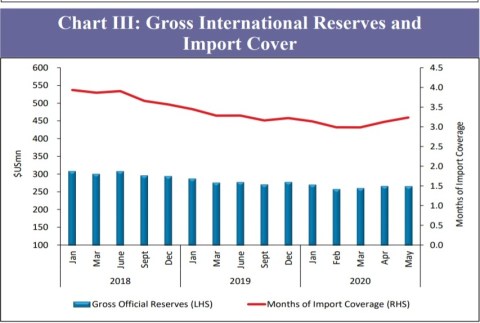
Recently published data by the Central Bank of Belize (CBB) shows that despite the precipitous drop in the Tourism sector’s foreign exchange (FOREX) inflows, overall balances remain relatively stable.

According to the CBB’s “Weekly Monetary Aggregates” for July 31st 2020, the (overall) Net Foreign Assets of the Banking System amounts to approximately BZD $886.5 million (or USD 443.25 million). This figure, when compared to the overall figure for the same period last year (BZD $877.4), is up by just about one percent. A similar increase is observed even when viewed as year to date (YTD).

Signs of this slight increase were visible from May, when the CBB, in its Monthly Economic Highlight for that month, wrote: “The net foreign assets of the banking system rose by $6.6mn (0.8%) over the year to date after declining by $21.9mn in May.” The regulator added, “During the month, domestic banks’ foreign asset position weakened by $19.5mn with the collapse in tourism revenue because of the adverse impact of the Coronavirus disease 2019 (COVID 19) pandemic. Concurrently, Central Bank’s holdings dipped by $2.4mn mainly as a result of facilitating Central Government’s debt service payments.” Continue reading

Mischaracterization of democracies’ Emperors in the tale of the Emperor who hath no clothes

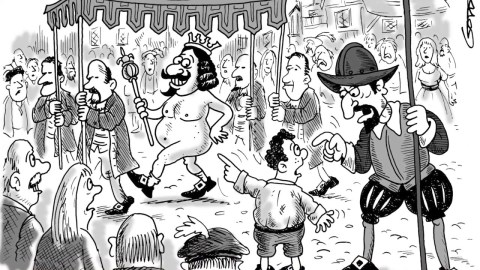
Most of us are likely somewhere between casually or intimately familiar with the Hans Christian Andersen story titled “The Emperor Haas No Clothes“. It’s a popular tale that has an important object lesson, and for this reason it is often employed as a metaphor for gullibility of the people in power, be they Presidents or Prime Ministers or established politicians in general. And for the most part, that interpretation is understandable, while yet, in my humble view, grossly mischaracterised.

The object lesson can certainly stand the test of time; however, the unfortunate mischaracterization begins at the very top: The King. For all intents and purposes, the king in a Democracy is not the elected official in the persona of a President or a Prime Minister or any member of Parliament for that matter. If one would recall the etymology of the word “Democracy” as being found in the Greek word “demoskratia”, it would then be recalled that therein the “demos” part of the word can be translated as “common people”. The latter half of demoskratia hails from the Greek word “kratos” meaning rule. When combined, the word speaks to the rule by the common people. One definition describes democracy as “system of government in which the sovereign power is vested in the people as a whole exercising power directly or by elected officials.” Therefore, the “Emperor” in this timeless tale (at least as far as a democracy is concerned) is the citizenry or the common man and woman. Continue reading

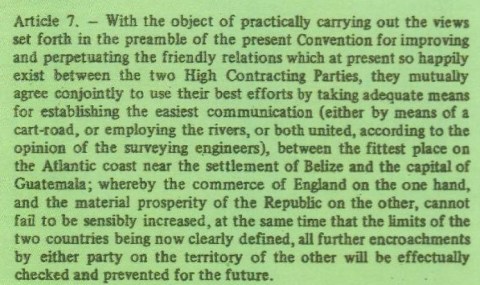
The notorious Article 7 and what was actually agreed

In the last installment of the Road to Referendum (RtR) column, we had commenced a discussion on the International Court of Justice (ICJ)’s bias as it pertains to preserving boundary treaties. As was pointed out in that last RtR piece, Alberto Alvarez-Jimenez—in his article “Boundary Agreements in the International Court of Justice’s Case Law, 2000-2010”, which was published in The European Journal of International Law— stated:

“The Court’s case law of the first decade of the 21st century shows that the Court has been somewhat flexible in endorsing the validity of boundary agreements once it has declared them. States that have subsequently invoked the nullity of boundary treaties or settlements have not found a receptive Court to uphold such claims. … While room for declarations of nullity certainly exists, it can be regarded as narrow, absent very compelling reasons. The threshold is high, and states are well advised when raising such a claim to expect success only exceptionally in boundary disputes” (Alvarez-Jimenez, 2012, p. 20). Continue reading

The ICJ is biased!!!

In the run up to the April 10th 2019 referendum regarding the Belize-Guatemala Territorial Dispute, it has become evident that the discussion needs to start to separate between facts and opinions. To that end, this article marks the first installment of a fact-check series for Res Publica 360.

Among the many things discussed about the International Court of Justice (ICJ) is the question as to whether or not the Court has a tendency to make biased rulings. And, as the title of this article indicates, the answer to that question is “yes”. However, one has to ask what is that bias?  Continue reading

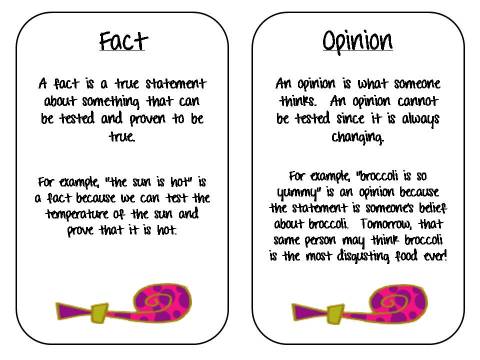
Facts versus Opinions

I’ve been trying figure out what is it exactly about this whole ICJ debate that bothers me so much. Is it that I simply disagree with certain positions? Nah, that’s not it; people are entitled to their positions, and we wouldn’t have a healthy democracy otherwise. Is it that my I.S.T.J. mind just cannot tolerate how emotional some arguments have become? Nope. That can’t be it, because I’d be concerned if patriotic Belizeans weren’t moved to their core on this matter. So, then what is it?

And then it hit me. It’s the fact that I miss the days when an argument clearly separated between facts and opinions. In this post-truth or post-fact era, there’s an interesting phenomenon where opinions are no longer necessarily based on facts; but on other opinions disguised as opinions. The mechanics of how this works seem to exist within #ECHOchambers, which are dangerous in and of themselves. Continue reading

From Chavismo to ‘Madurismo’

“Under capitalism, man exploits man; under communism, it’s just the opposite.”–John Kenneth Galbrait.

I’ve found myself quoting Galbrait a lot lately, especially when looking at the happenings in our South American neighbor, Venezuela. However, I’d be the first to admit that it’s applicability to the current happenings in Venezuela is not as perfect, because as I’ve written in an earlier post, while there are natural overlaps between economic ideologies and the sociologists’ definition of political systems, the two are not the same.  Continue reading

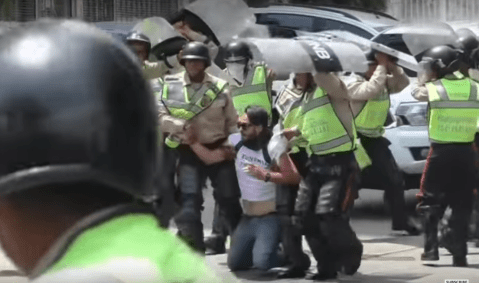
From Left-wing populism to authoritarianism

Venezuela’s path to undoing its democracy amidst ‘Petro-Muzzled’ region

Traditionally, whenever the topic of Venezuela is discussed or written about, the stories are almost always framed as the Davidesque struggle of a Leftist regime against the Goliathan evils of the economic Right. Essentially, such characterisations are not necessarily invalid, because Venezuela’s government remains committed to its socialist principles, while resisting the tenets of its more conservative counterpart.

However, since the days of Chavez to the present times of his hand-picked successor President Nicolas Maduro, the issue is becoming less about capitalism challenging socialism and more about authoritarianism supplanting democracy–the ostensibly natural outcome of populism.  Continue reading

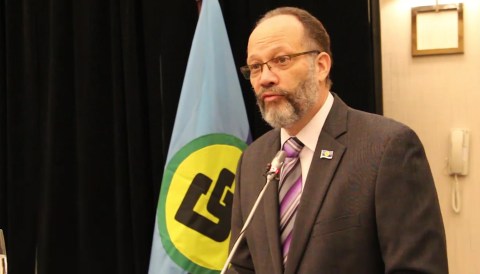
CARICOM to U.S. Courts: You’re putting the C.C.J’s legitimacy at risk!

  • Decisions that snub CCJ opinions undermine its legitimacy and impede aspirations for independence and regional cohesion.
  • Allowing CCJ opinions to be circumvented has the deleterious effect of weakening the value of the CCJ as an institution.
  • “Further efforts to utilise the CCJ in strengthening the governance of its Member States and to expand the CCJ’s final appellate jurisdiction will be hindered if import decisions by the CCJ that go directly to the rule of law and support essential tenets of democracy are summarily disregarded by courts of other jurisdictions in the international community.”—CARICOM Secretary General Irwin LaRoque.

Should the United States’ Courts be able to override decisions made by the highest appellate Court in the Caribbean region, The Caribbean Court of Justice (CCJ)? That’s the question that has been brought, once again, to the fore, of late, in large part due to the latest developments in the Belize government’s case against entities such as BCB Holdings Limited, Belize Social Development Limited, and NEWCO. Continue reading